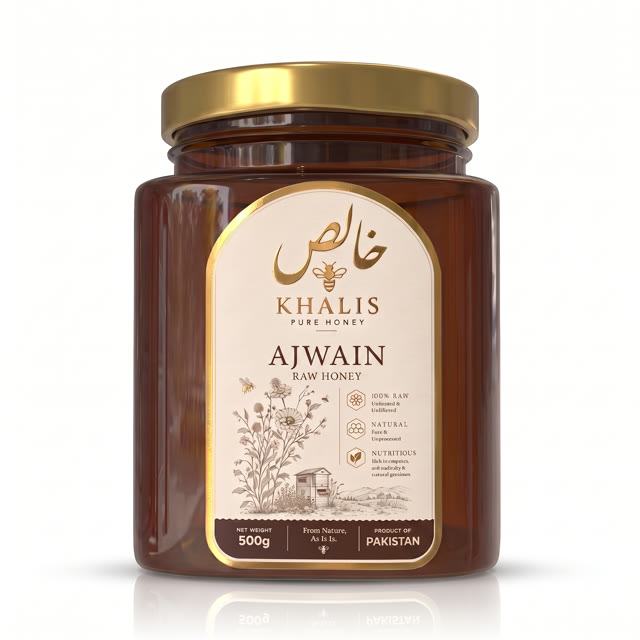
Khalis Ajwain Honey
5.01 reviewFrom the carom fields — warm, herbal, unmistakable. The local connoisseur’s jar.
Bottled by HoneyBank — the Gulf's honey specialists, trusted by 20,000+ customers across the Emirates.
The story of this jar
Put bees on flowering ajwain and they return with a honey nothing else resembles: amber-dark, warm, edged with thyme and a savoury depth that stops first-time tasters mid-sentence.
Ajwain honey is Pakistan’s quiet specialty — the jar local honey lovers hunt down at farm gates. It carries the herb’s aromatic signature in a honey’s body, which is exactly why cooks and connoisseurs prize it.
From the source
From carom fields in bloom — one of the few places on earth this honey exists.
- Single origin — one bloom, one landscape, never blended
- Harvested in season; batches are genuinely limited
- Sealed at source and imported whole — lab-checked by HoneyBank
Why this jar
Pakistan’s specialty honey
A single-origin harvest few countries can produce at all.
Savoury-sweet character
Thyme-adjacent warmth — extraordinary over cheese, karhai naan or roasted nuts.
The ajwain heritage
The herb every Pakistani kitchen trusts, translated by bees.
How to take it
- Drizzle over hot naan with butter — the classic.
- One spoon in warm water after dinner, the ajwain way.
- Pair with sharp cheddar or walnuts for guests.
Loved by our customers
I received the honey and it was really good. I’ll be ordering more next week.
Part of the Khalis range — rated 4.9★ by our 20,000+ customers across the Gulf. Read all reviews →
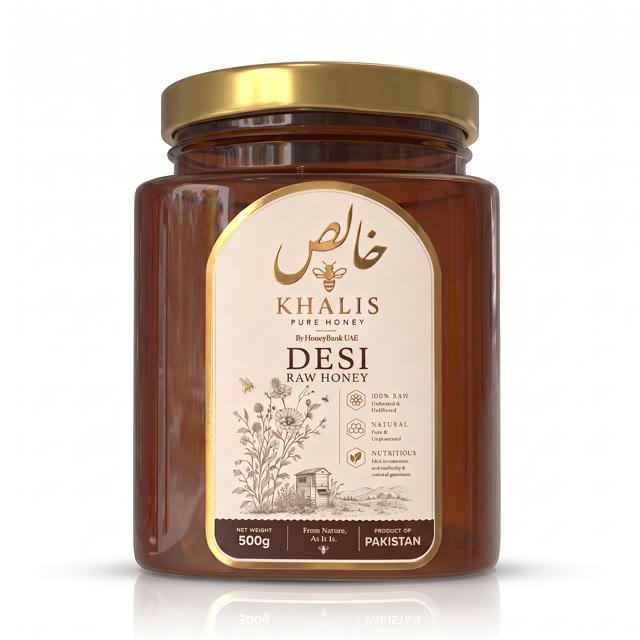
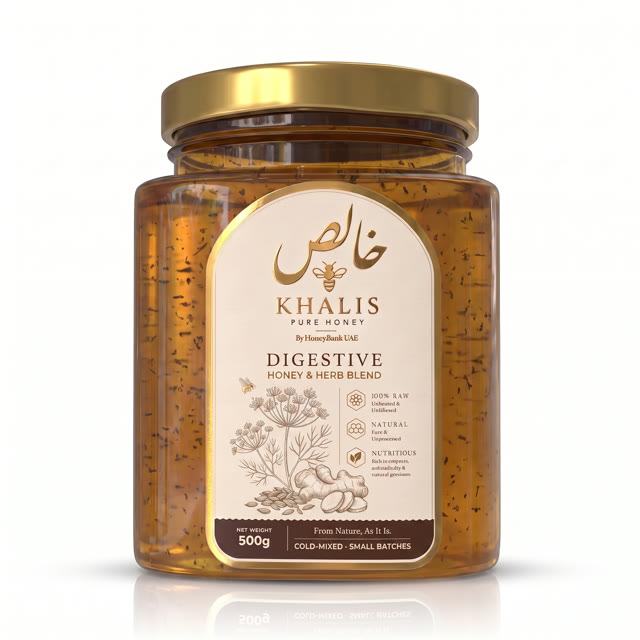
Pairs well with
Questions, answered
What does ajwain honey taste like?
Warm amber honey with a distinct herbal, thyme-like note from the carom bloom — sweet first, savoury-aromatic at the finish. It is the most distinctive local honey we bottle.
Is ajwain honey good after meals?
Ajwain itself is the subcontinent’s classic after-meal seed, and its honey carries that association — many customers take a spoon after dinner. (Food tradition, not a medical claim.)
Why is it called the connoisseur’s pick?
Because it is scarce, distinctive and local — the jar people graduate to after desi honey, and the one they bring back from village trips when they can find it.