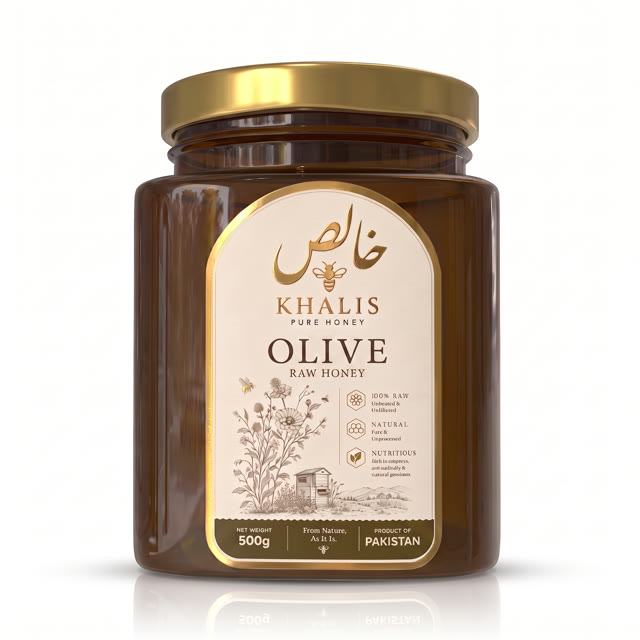
Khalis Olive Honey
From Pakistan’s young olive groves — a rare jar, returning next season.
Bottled by HoneyBank — the Gulf's honey specialists, trusted by 20,000+ customers across the Emirates.
The story of this jar
Pakistan’s new olive belt — the groves planted across Potohar and the frontier in the last decade — has begun to feed bees, and the result is one of the rarest local honeys there is: delicate, faintly green, olive-leaf soft.
We bottle it only when the groves give enough. The last batch sold out completely; the next one is, quite literally, on the trees. Order any other jar today and watch this page — it returns in season.
From the source
From Pakistan’s young olive belt in Potohar — a honey still growing up.
- Single origin — one bloom, one landscape, never blended
- Harvested in season; batches are genuinely limited
- Sealed at source and imported whole — lab-checked by HoneyBank
Why this jar
Pakistan’s newest honey
From the country’s young olive-farming belt — a honey that didn’t exist a generation ago.
Genuinely scarce
Tiny groves, tiny yield. When it’s gone, it’s gone till next bloom.
Collector’s local jar
The one even seasoned desi-honey buyers haven’t tasted.
How to take it
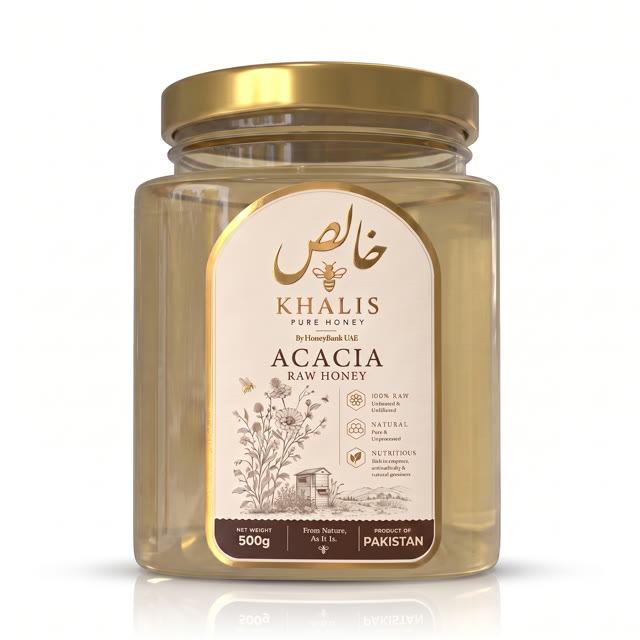
- While you wait: Acacia keeps the everyday drizzle going.
- When it returns: taste it neat first — the olive-leaf note is subtle.
- Best over warm bread with olive oil and za’atar, fittingly.
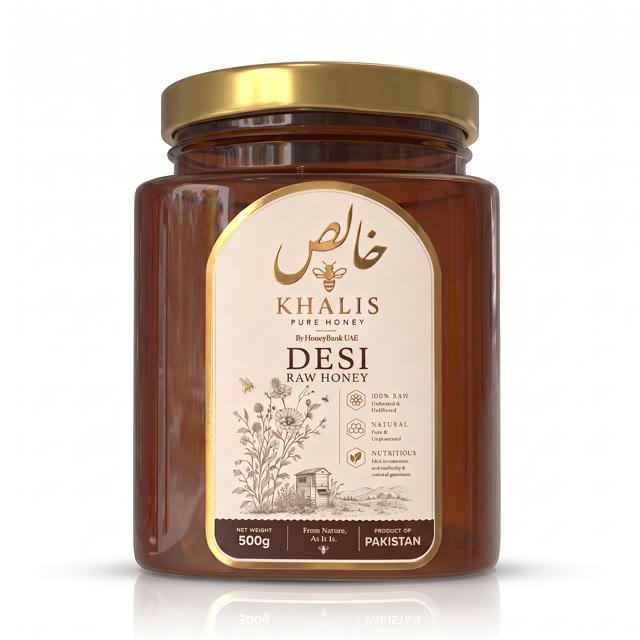
Pairs well with
Questions, answered
When will Olive Honey be back in stock?
Next harvest season, once the groves bloom and the hives deliver. Follow @getkhalishoney on Instagram or order any jar and we’ll keep you posted with your delivery.
What does olive honey taste like?
Delicate and lightly herbal, with a soft green, olive-leaf character — closer to acacia’s mildness than to sidr’s depth.
Why is a Pakistani olive honey rare?
Olive farming in Pakistan is barely a decade old and the groves are still young, so nectar volumes are small. It is a honey that is literally still growing up.