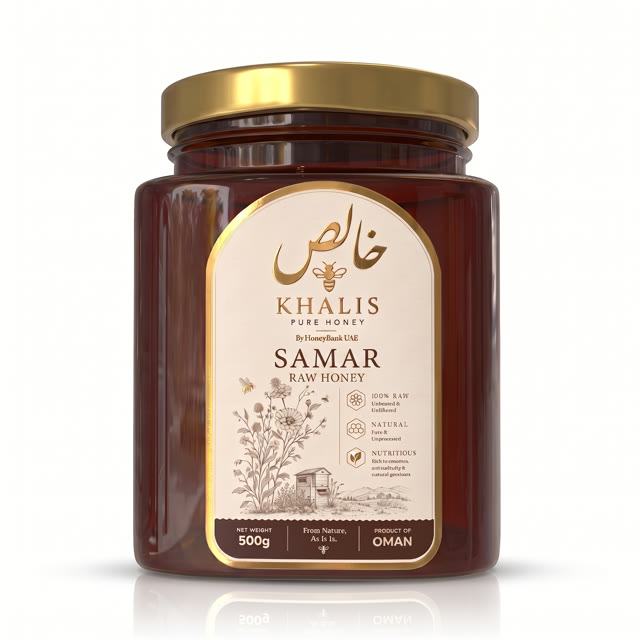
Khalis Samar Honey
Omani desert samar — dark, mineral, the taste of the wadi after rain.
Bottled by HoneyBank — the Gulf's honey specialists, trusted by 20,000+ customers across the Emirates.
The story of this jar
The samar tree — acacia tortilis — is the flat-topped survivor of Arabia’s deserts, and its honey is Oman’s quiet treasure. Bees work the brief samar bloom in the wadis and give a dark amber honey with mineral depth and a dry, aromatic finish.
Samar is the honey of Omani hospitality, poured thin over dates or taken with kahwa. It is less famous than sidr and loved by those who know it precisely for that.
From the source
From the samar (acacia tortilis) trees of Oman’s wadis, after the rains.
- Single origin — one bloom, one landscape, never blended
- Harvested in season; batches are genuinely limited
- Sealed at source and imported whole — lab-checked by HoneyBank
Why this jar
Desert single-origin
One tree, one bloom, one landscape — the wadi in a jar.
Mineral depth
Darker and drier than floral honeys; closer to molasses than to syrup, yet 100% honey.
The insider’s Gulf jar
Every sidr lover we know eventually orders samar next.
How to take it
- Drizzle over dates or halwa the Omani way.
- Take with unsweetened kahwa or green tea — it is the sweetener and the flavour.
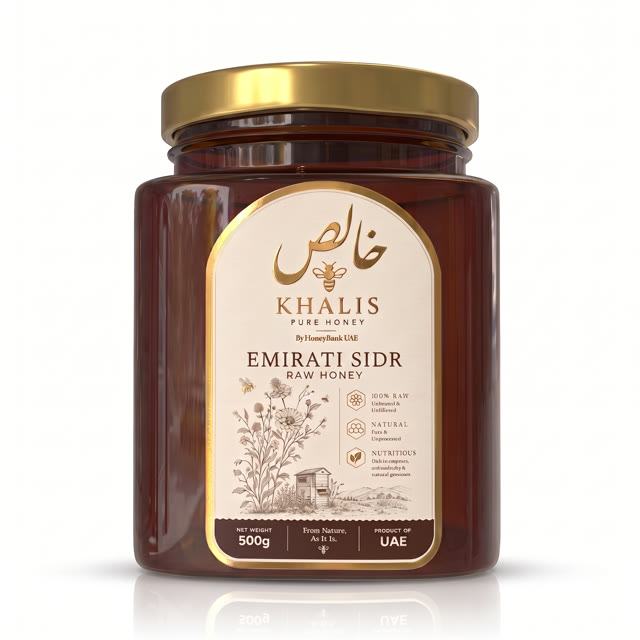
- Try it against Emirati Sidr side by side; the contrast teaches the Gulf.
Pairs well with
Questions, answered
What is samar honey?
Honey from the bloom of acacia tortilis (samar), the iconic desert tree of Oman and Arabia. It is dark, mineral-rich and aromatic — one of the Gulf’s classic honeys.
How does samar compare to sidr?
Sidr is rounder and more caramel; samar is darker, drier and more mineral. Many households in the Gulf keep both — sidr for mornings, samar for the table.
Is it really from Oman?
Yes — sourced from wadi apiaries in Oman during the samar bloom and imported sealed, like every Khalis origin jar.